
Loving Someone with ADHD (and 47 Open Tabs)
What Is ADHD?
ADHD (Attention‑Deficit/Hyperactivity Disorder) is a neurodevelopmental condition that includes a combination of hyperactive, impulsive, and inattentive symptoms. These ADHD symptoms can affect daily functioning, emotional regulation, and relationships.
Hyperactivity and impulsivity can show up in our actions, such as fidgeting, restlessness, getting out of our seat, or having difficulty waiting our turn. They can also show up in our relationships through talking excessively, interrupting others, and escalating emotionally more quickly than expected.
Inattention can appear in many ways: forgetting details of a task; difficulty sustaining focus on a task or conversation; seeming not to listen when others speak; procrastinating on tasks that require a lot of cognitive labor; losing necessary items (keys, wallet, etc.); getting distracted by thoughts or the environment; and forgetting appointments or obligations. These are all common signs of ADHD in adults and teens.
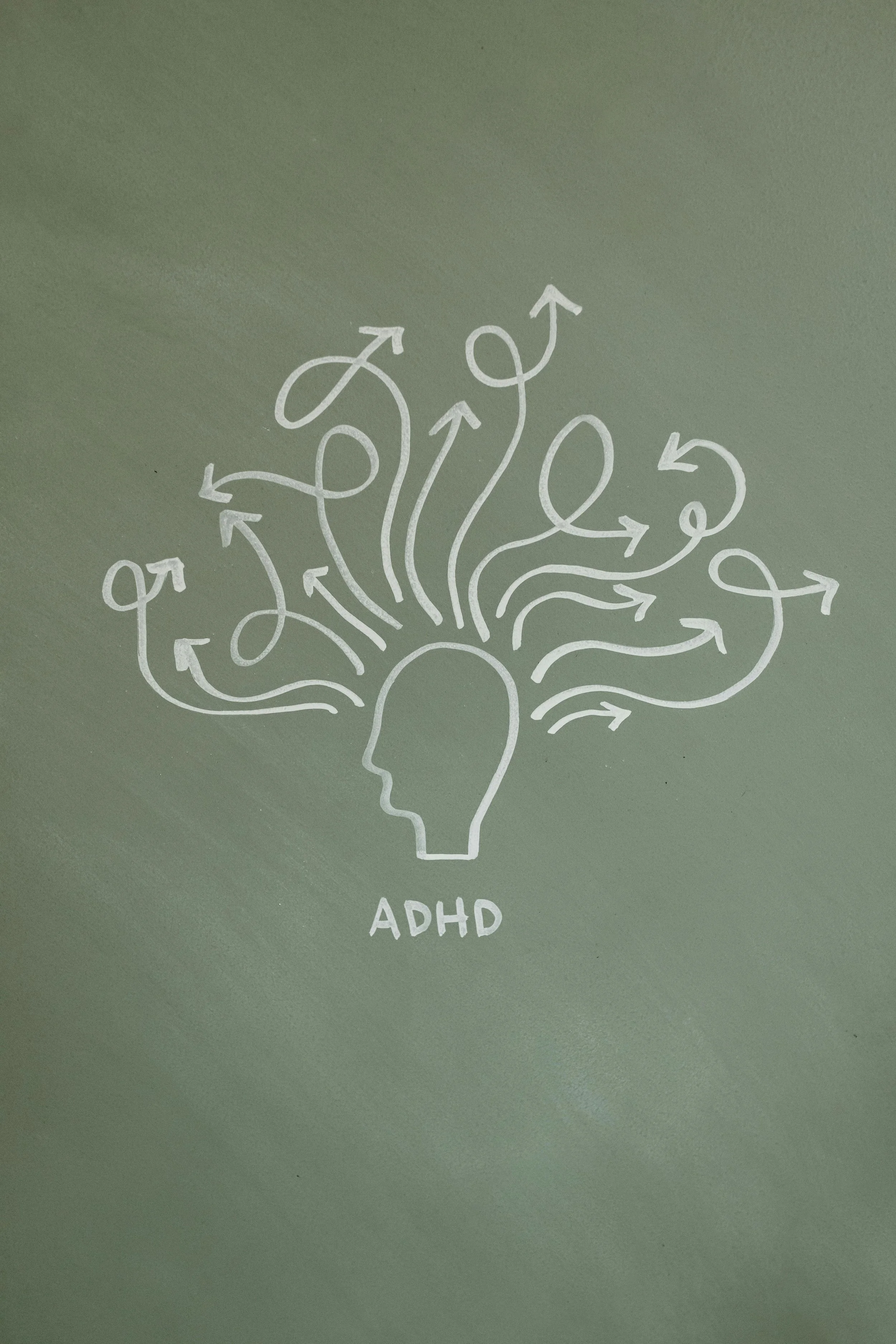
ADHD is something people grow up with. It is not something they “grow out of.” For a diagnosis, symptoms have been present since childhood. Many adults with ADHD remember receiving feedback in school that they talked too much, couldn’t sit still, or were always forgetting their homework. Kids can become really frustrated by this and sometimes walk away with internalized shame: “I’m not trying to be bad. I just keep forgetting.”
Clinically, we also specify which symptoms are predominant. Some people present primarily with hyperactive and impulsive symptoms; others primarily with inattentive symptoms; and some with a combined presentation (American Psychiatric Association, 2022).
ADHD Facts
Worldwide population surveys suggest that 7.2 to 10.2% of individuals have ADHD (American Psychiatric Association, 2022).
ADHD is highly genetic, with heritability estimated at 74% (American Psychiatric Association, 2022). If you have been diagnosed, there is a strong chance a parent also has ADHD.
ADHD has been a controversial diagnosis for decades. In the last ten years, more people are being accurately assessed as clinicians improve in recognizing ADHD across different presentations.
Receiving a diagnosis can be incredibly helpful. It allows for appropriate treatment and often brings relief. Without a clinical explanation, many individuals carry painful and inaccurate labels from earlier in life: lazy, unpredictable, troublemaker, defiant, annoying, unreliable.
What If ADHD Was a Superpower?
Many successful people have ADHD. You’ll find it across professions: surgeons, entrepreneurs, authors, teachers, therapists, software developers, and more. Neurodiversity shows up everywhere.
Certain environments tend to support ADHD strengths:
Roles with variety and changing responsibilities
High‑intensity or urgent tasks
Flexible workflows and autonomy
Opportunities for movement and problem‑solving
These settings allow individuals with ADHD to truly shine.
Your friend or partner with ADHD might hyperfocus on a topic with such intensity that they solve a problem multiple ways. They may come up with creative, exciting ideas for how to spend time together. They are often playful, deeply passionate, and capable of having incredibly engaging conversations, especially around shared interests. These are some of the beautiful strengths of ADHD in relationships.
Loving Someone with ADHD Requires Flexibility
With all of this in mind, loving someone with ADHD often requires flexibility. Supporting a partner with ADHD means understanding how their brain works, not assuming they don’t care.
Your partner or friend may:
Forget to do something you asked
Respond impulsively in emotional moments
Need reminders
Seem distracted during conversations
Take a while to text back
Want to leave events early
Run late more often than you would like
This can be frustrating. And it does require a level of grace, understanding, and compromise.
If you were to ask someone with ADHD whether they don’t care about you, what matters to you, or whether they intend to be dismissive, rude, or distant, the answer is almost always no.
More often than not, the answer you will get is:
“I’m trying my best.”
Let me challenge you.
Instead of becoming angry, offended, or irritated, pause. Pause and remember your loved one is likely doing their best.
It can be far more loving, and far more peaceful for both of you, to offer a gentle reminder, find ways to meet in the middle, and extend a bit of grace.
Yes, it can be frustrating to be in a relationship with someone who has ADHD. But it can also be deeply connecting to love someone who is trying, who cares, and who keeps showing up, even when it’s hard.
Sources:
Diagnostic and Statistical Manual of Mental Disorders, Fifth Edition, Text Revision. (2022). American Psychiatric Association Publishing. https://doi.org/10.1176/appi.books.9780890425787